A detection claim fails when it covers “all foreign material” and names no object. Write the hazard first, then the product, then the miss.
This page does not describe how a metal detector, an x-ray unit, or a camera works. No manufacturer sheet was opened, so no principle, aperture, or sensitivity is stated.
Section 2 of the Food and Drug Administration study dated 9 August 2004 says foreign objects, or physical safety hazards, are the least likely to affect large numbers of people and usually are easily recognized. Section 4, the same date, gives glass and metal as examples of foreign objects when it states the study’s objective. “Easily recognized” in that review is not a claim that a device on a packaging line sees every object. The review does not describe a camera.
Section 4’s objective splits hazards into microbiological, chemical, and physical. This page stays on the physical examples the study names, glass and metal, and does not borrow the allergen or cleaner discussion from the same paragraph. Chemical control is a different file. If that file is missing, say so on the evidence checklist instead of folding it into a foreign-object sentence.
Keep the claim inside four lines
| Line | Write | Do not write |
|---|---|---|
| Hazard | The object you mean, such as glass or metal if that is the object | "All foreign material" |
| Product | What the pack holds, and the pack format | A product you have not named |
| Device | What the file says the device is claimed to notice | A principle you have not read |
| Miss | What that claim does not cover | A promise of zero misses |
| Reject | Who removes the pack, and where it goes | A silent conveyor |
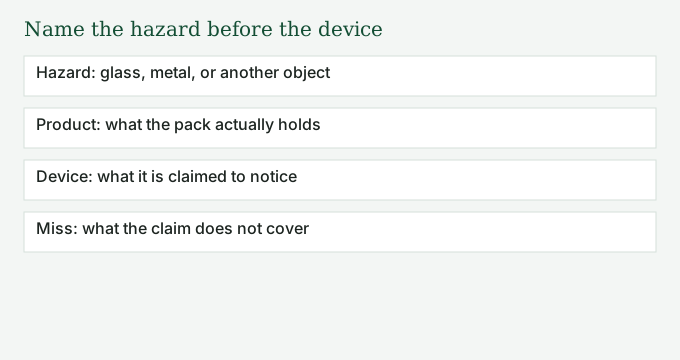
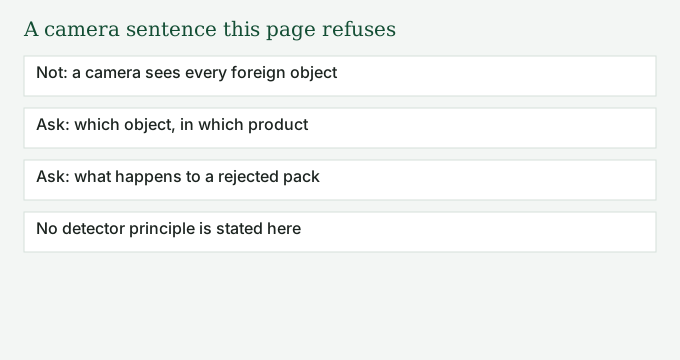
Glass and metal are the examples Section 4 names. A third object needs its own line. Do not stretch those two examples until they cover every piece a plant might fear. That stretch fails the file, because the study did not make it.
The seal questions are a different check. Use seal integrity questions when the subject is the closure, and the cleanability page when the subject is a surface that holds soil. None of the three pages is a compliance guarantee.