Calling a surface cleanable fails when nobody has named the place the rinse does not reach. Ask that before the word goes into a specification.
The range of this page is the 9 August 2004 literature review and the panel notes from the same study. No current hygienic-design standard was opened, so none is quoted. No machine model is named.
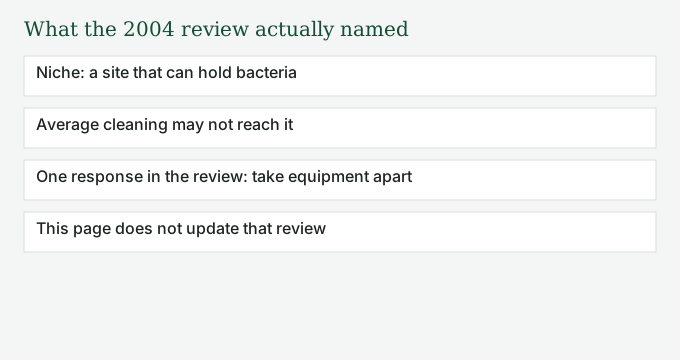
Section 2 of that study says niche environments are sites within the manufacturing environment that can harbor bacteria, that they are a significant cause of post-processing contamination, and that they are difficult to reach with average cleaning and sanitizing procedures. It says plants that put in a greater than average effort must identify and eliminate niches by taking equipment apart. It also says others apply a post-package pasteurization method. Those sentences are the review’s, dated 9 August 2004. This page does not say they are the requirement in force now.
Section 4 of the same study, also dated 9 August 2004, lists “poor plant and equipment sanitation” among problems the panel treated as applicable across food sectors. It lists “stagnant water due to dead ends in plumbing” as more sector-specific, and it says biofilms are more of a concern for the refrigerated, frozen, and dairy sectors. Use those phrases as questions, not as a score for a named line.
Questions to write down
| Ask | Write the answer from the file in front of you |
|---|---|
| Contact | Which surface touches the food or the pack? |
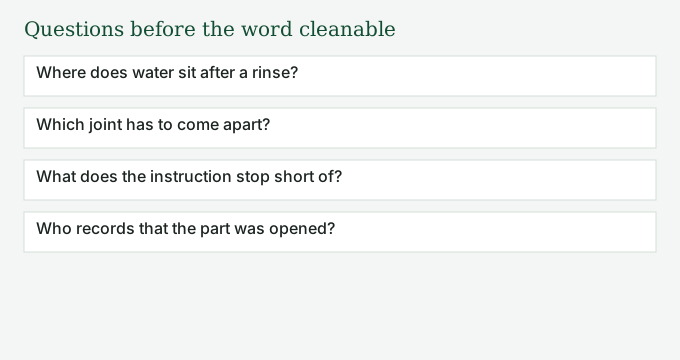
| Hold-up | Where can water or product sit after a rinse? |
| Opening | Which joint has to come apart, and is that step in the instruction? |
| Stop | Which part does the instruction explicitly not cover? |
| Record | Who writes that the part was opened? |
Bring the file split from the evidence checklist. If the hazard is an object in the pack rather than a surface, use the foreign-material page. Neither page states a numerical cleanliness limit.