Start with the parts on the line, then prepare the register and breakage response together. Glass and hard plastics can break, chip, or shatter, introducing fragments into food products. Maintain an inventory of essential glass and brittle plastic used in the facility. Establish a written procedure on how to respond to a breakage, including cleanup and disposal.
Use the field prompts below to prepare your line documents, or download the blank register and breakage clearance form. For the wider line review, continue to packaging safety.
What belongs in the glass and brittle plastic register?
Limit non-essential glass and brittle plastic. Personnel responsible for approving new ingredients or equipment should evaluate them for non-essential glass or brittle plastic, and substitute another, appropriate material if present. Develop special handling procedures for essential glass and brittle plastic, such as changing light bulbs.
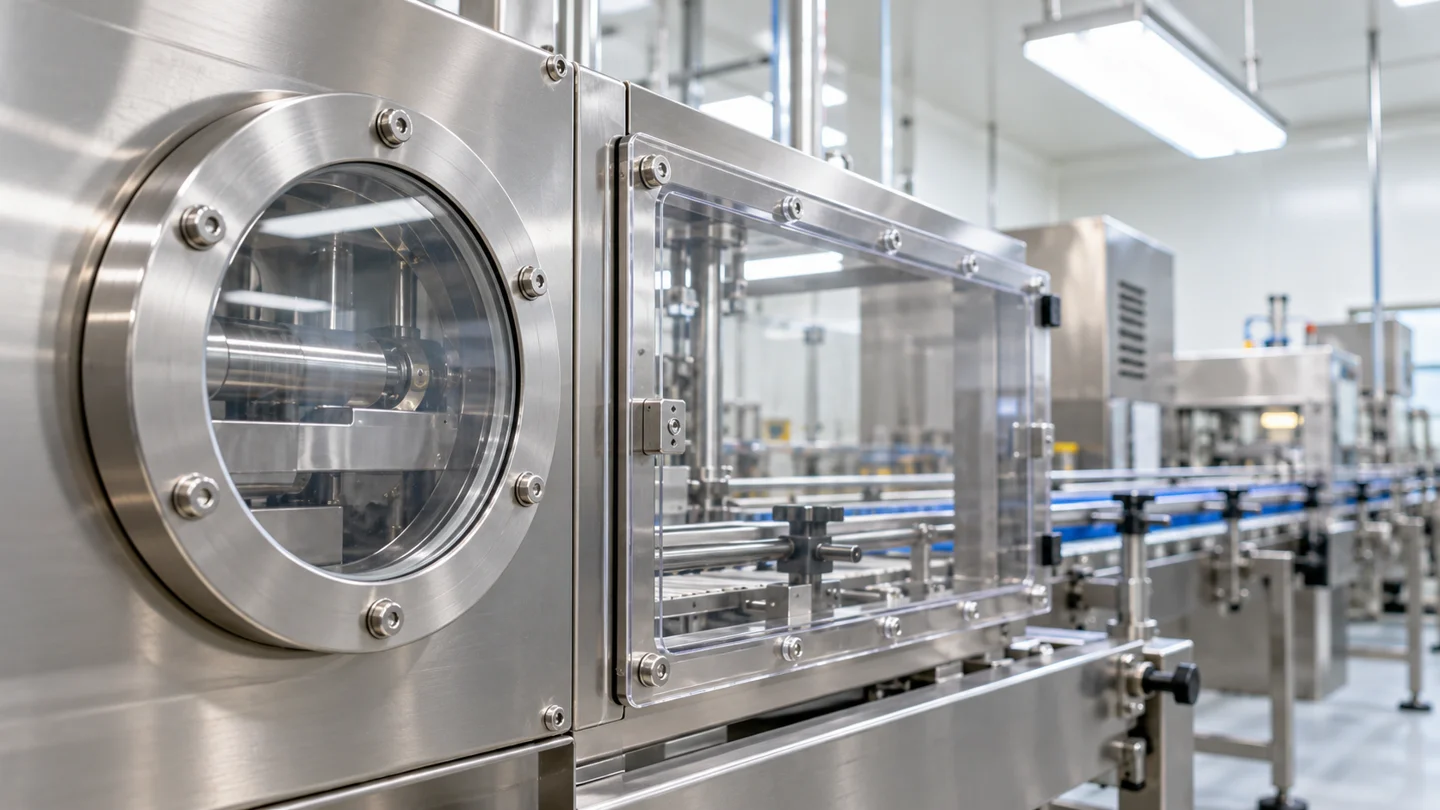
Potential essential uses include light covers, windows, gauge covers and sight glass. Personal items are often a source of non-essential glass and brittle plastic.
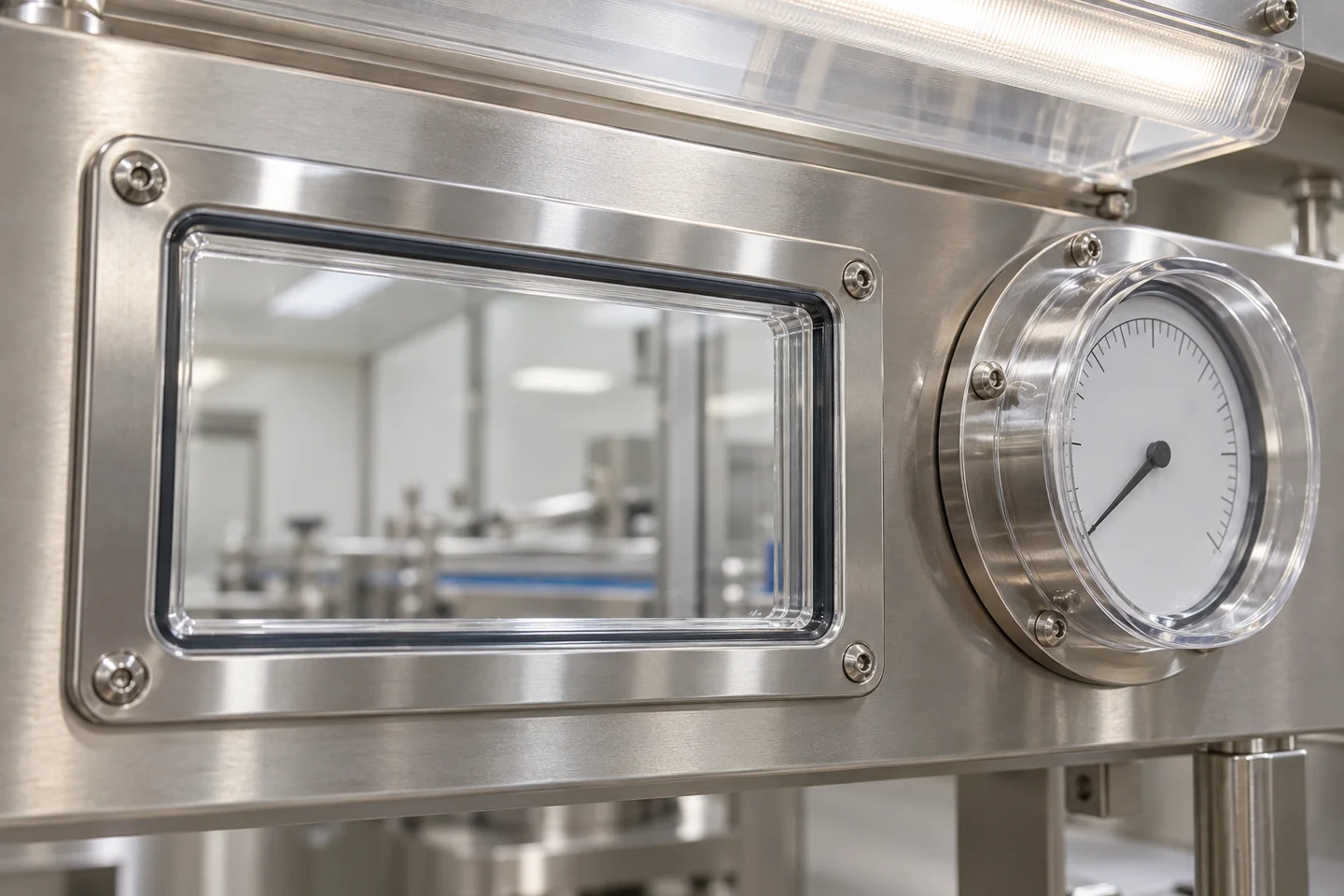
Register field prompts
Use the following structure for the line register. Complete the blank fields for the installed items.
| Field group | Register entry |
|---|---|
| Item / component | The register should describe each permitted item. |
| Line / station / position | The register should record the location of permitted items. |
| Quantity | The register should record the quantity of permitted items. |
| Type / condition | A practical glass register records location, number, type and condition. |
| Exposure / protection | A register can include whether each item is over exposed food and protected. |
| Check history | A practical register can record the last check, quantity found, condition and next check. |
Use the register alongside the packaging-line audit checklist.
How often should brittle plastic be checked?
For food-packaging manufacture, the SQFI code sets the inspection basis: Glass, porcelain, ceramics, and brittle plastics that are permitted in manufacturing areas shall be listed on a glass inventory and inspected at a frequency based on risk. Inspection confirms absence of damage or monitors further damage before repair or replacement.
Regular inspections of product handling/contact zones shall be conducted to ensure they are free of glass or similar material and to establish changes to the condition of objects listed in the glass inventory. PrimusGFS guidance states: Checks should be documented.
Use the register’s condition, exposure and protection prompts when discussing the inspection plan. Fill in the last check and next check. Assign the task: Control-measure documentation describes who performs the task.
Breakage isolation: the area, equipment and product
Isolate and clear the affected area
For glass or similar brittle-material breakage in food-packaging manufacture, the SQFI code states: The affected area and equipment shall be isolated, cleaned, and thoroughly inspected prior to restarting operations.
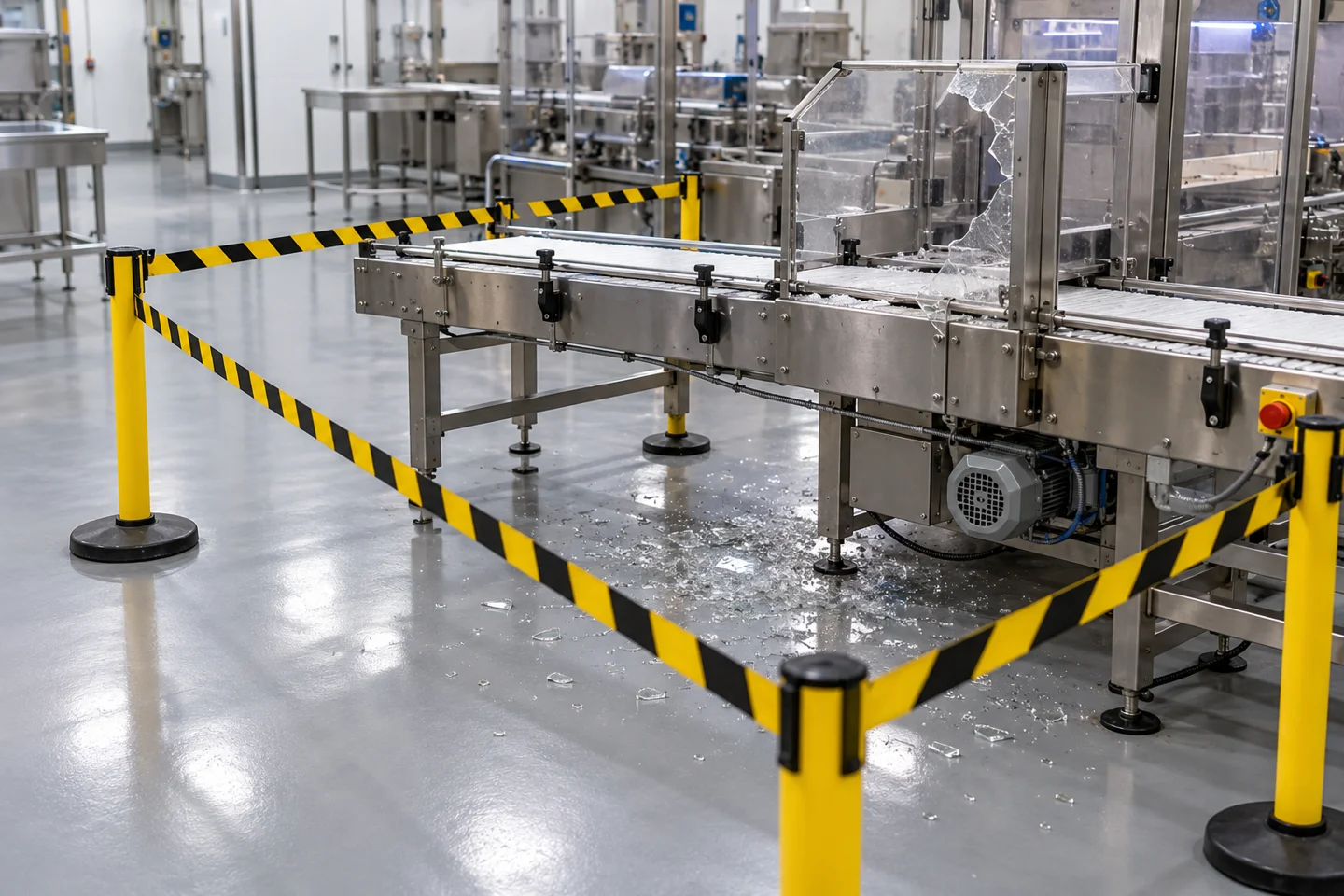
Earlier SQFI food-packaging implementation guidance explains the cleanup footprint: Where a glass or similar breakage occurs, the procedure must include a glass clean-up process that covers the footprint of where glass shards may have been distributed. The procedure must include a shut-down of the whole area, and a thorough clean-up to eliminate all broken glass.
On the clearance form, describe the affected area and equipment, then record the footprint searched. Use the space for the actual incident boundary.
Trace the product exposure window
The FDA juice guidance gives a specific glass-container inspection example: If broken glass is observed, the line is stopped, the glass is removed, and the product that has moved through that area since the last inspection is placed on hold for further action as appropriate.
Use the last inspection and the product passage through the affected area as prompts in the incident investigation. Enter the last check, affected product and disposition in the clearance form.
For food handling and processing facilities, the American Society of Baking gives the disposal instruction: If any ingredients, finished products, or works-in-progress may have been contaminated by the breakage, the affected material must be discarded. Maintain records of product disposal associated with glass or plastic breakage.
Inspect cleanup tools and footwear
The SQFI food-packaging breakage procedure also addresses the items used around the incident: Utensils and equipment used for clean-up and footwear of those walking in the vicinity shall be inspected and cleaned if necessary.
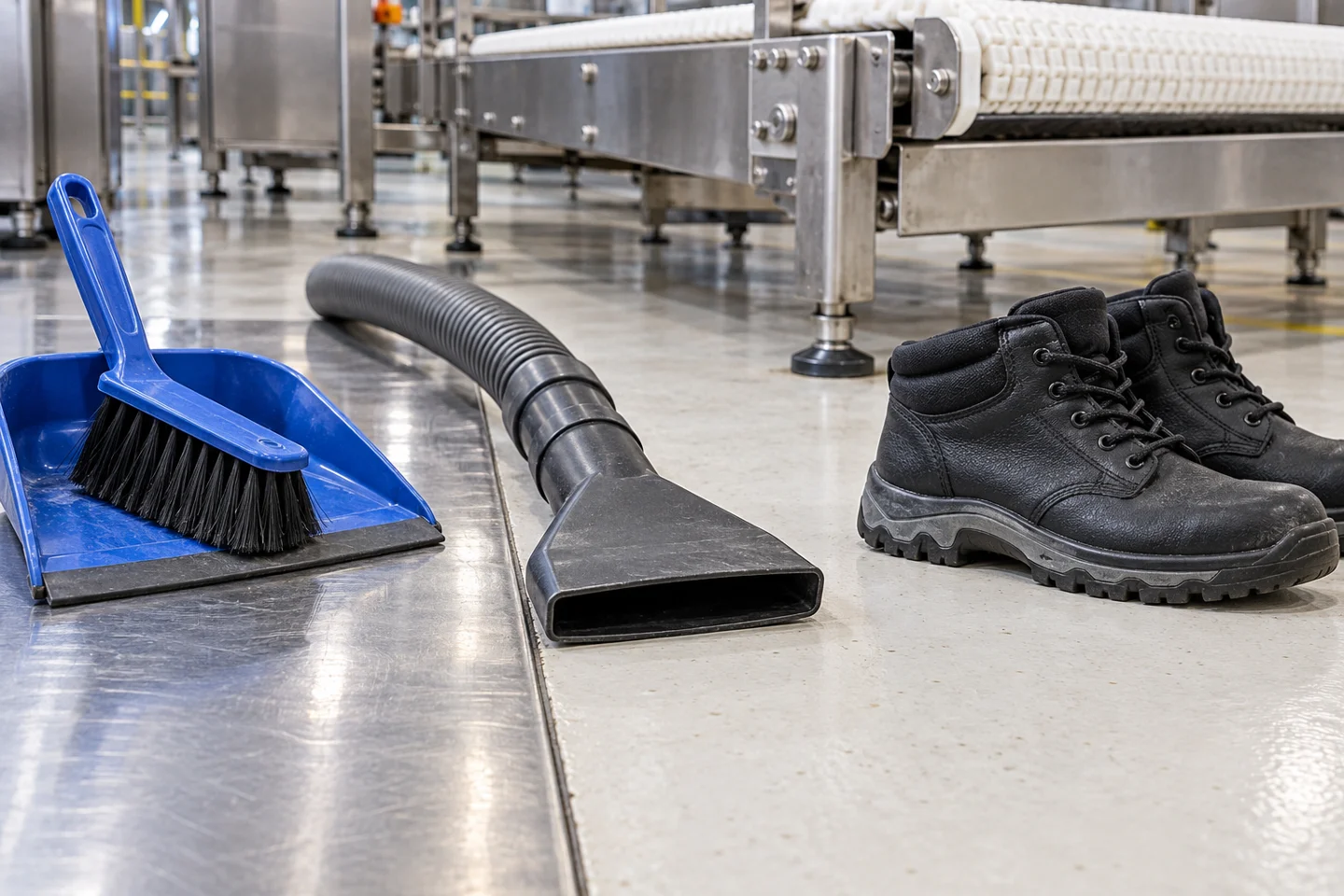
Earlier SQFI implementation guidance names the cleanup items: Brooms, brushes, vacuums and footwear must be included in the clean-up. The area must be thoroughly inspected before recommencing operations. A suitably responsible person clears the affected area before operations commence.
Breakage clearance record
Use these prompts to complete the blank breakage clearance form. Keep the product disposition and area-clearance entries distinct.
| Record section | Entry prompt |
|---|---|
| Incident | What happened? Which item and location? |
| Product investigation | Last inspection? Product that passed through the area? Disposition? |
| Isolation and cleanup | Affected area and equipment? Footprint searched? Cleanup completed? |
| Cleanup items | Utensils, equipment and footwear inspected? Cleaning needed? |
| Area clearance | Inspection outcome? Responsible person clearing the area? |
| Follow-up | Future preventative actions? |
PrimusGFS guidance describes the breakage record: Breakage records should state what happened. Breakage records should record the disposition of potentially affected product. Breakage records should record future preventative actions.
Other foreign material examples
For the wider foreign object control review, consider these additional examples:
- Rubber seals on equipment may degrade and release small pieces.
- Broken pallets or packaging material can supply wood splinters.
- Flaking paint from overhead structures or equipment is a physical hazard example.
Download the glass and brittle plastic register and breakage clearance form for your next line walk-through.
Sources
- American Society of Baking — Glass and Brittle Plastics
- SQFI — Food Safety Code: Manufacture of Food Packaging, edition nine
- SQFI — Manufacture of Food Packaging guidance, edition eight point one
- FDA — Juice HACCP Hazards and Controls Guidance, first edition
- Primus Group — PrimusGFS summary of changes
- FSSC — Preventing Physical Contamination
- Canadian Food Inspection Agency — Conducting a hazard analysis
- Glass and Hard Plastic Control: What’s the Point?
- TaroStack — Glass and Brittle Plastic Policy: Register, Breakage Steps