A seal result fails as a description when it has a pass mark and no object. Name the pack, the sample, and the person who stops the line.
No numerical limit is printed here. No leak pressure, peel strength, or defect rate was taken from a standard, because no seal-test standard was opened on 14 October 2026.
Section 4 of the Food and Drug Administration study dated 9 August 2004 lists “incorrect labeling or packaging” among the top-rated problems for baked goods in that panel round, beside “poor plant and equipment sanitation.” The study’s opening also names physical hazards as foreign objects such as glass and metal. Those lines are why a pack check has to say what it looked at. They are not a seal specification.
The 9 August 2004 panel also treated poor plant and equipment sanitation as a problem that applied across sectors, not only to baked goods. A seal check that ignores a dirty sealer jaw is only half a description. Write whether the sanitation file and the seal file refer to the same line and the same day. If they do not, leave the connection blank rather than inventing one.
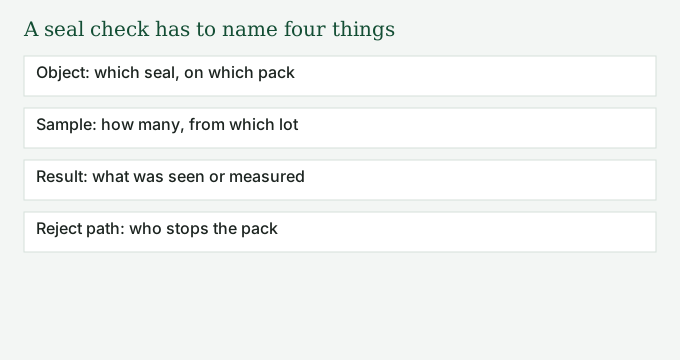
What to name
| Name | The question | Blank means |
|---|---|---|
| Object | Which seal, on which pack format? | The word "seal" is doing all the work |
| Sample | How many packs, from which lot, taken when? | The lot is not written |
| Result | What was seen or measured, in the method's own words? | The page only says pass |
| Reject path | Who stops the pack, and where does it go? | Nobody is named |
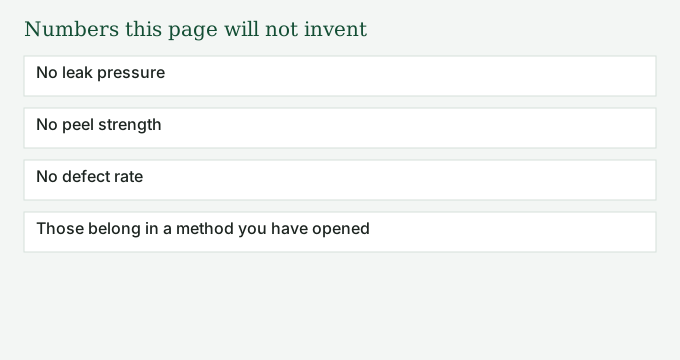
A dirty sealer and a failed seal are still two files. Write whether they name the same line and the same day. If they do not, leave the link blank. That blank is the record of the gap, and it costs less than a sentence that joins them without a source.
If the worry is an object inside the pack rather than the seal itself, read the foreign-material page. If the worry is whether the code on the pack matches the lot file, read coding and lot records.