Failure to adequately clean shared equipment between runs of products with different allergen profiles may render the product adulterated under section 402(a)(4) of the FD&C Act. Under 21 CFR 117.35(d), all food-contact surfaces (FCSs) must be cleaned as frequently as necessary to protect against allergen cross-contact, and under 21 CFR 117.135(b), allergen cleaning preventive controls must be written. During Supplier & Facility Audits, auditors examine written changeover sequences, physical packaging line clearance, swab location maps, and signed line-release records before shared lines resume production.
Regulatory Rules and Supplier Audit Scope for Shared Lines
Section 201(qq)(1) of the FD&C Act defines a major food allergen as milk, egg, fish, Crustacean shellfish, tree nuts, wheat, peanuts, soybeans, and sesame. Section 201(qq)(2)(A) of the FD&C Act excludes highly refined oils derived from a major food allergen from the definition of major food allergen. Allergen cross-contact is defined in 21 CFR part 117 as the unintentional incorporation of a food allergen into a food.
Under 21 CFR 117.135, preventive controls for a major food allergen must ensure that food will not be adulterated under section 402 or misbranded under section 403(w). Inadequate allergen label controls, such as failure to check the product label to ensure major food allergen ingredients are labeled as required, may result in misbranding under section 403(w). Allergen advisory statements are not a substitute for adherence to current good manufacturing practices and, when used by a facility, food allergen preventive controls. When there is evidence of inadequate allergen cross-contact controls, FDA may deem a product adulterated under section 402(a)(4) even when the product bears an allergen advisory statement. FDA has not established a threshold for any major food allergen.
Effective allergen changeover validation separates upfront proof of a cleaning regime from day-to-day line-release checks. Validation is the process of gathering evidence to prove that a cleaning regime can effectively and repeatedly remove allergen soils and is ideally carried out prior to implementation of the regime, whereas verification is carried out on an ongoing basis to prove that the validated allergen cleaning regime was performed correctly and remains effective. FDA Appendix 10 recommends that validation of allergen cleaning procedures occur at least annually, when introducing a new product or allergenic ingredient, when introducing new cleaning procedures, equipment, or chemicals, or when reducing cleaning frequencies.
Under 21 CFR 117.160(c)(1), 21 CFR part 117 does not require validation of food allergen controls, although nothing in part 117 prevents a facility from validating a food allergen control if it chooses to do so. Under 21 CFR 117.170(a), part 117 requires a facility to conduct a reanalysis of the food safety plan as a whole at least once every 3 years. Under 21 CFR 117.435, an onsite audit of a supplier for a food allergen hazard must be performed by a qualified auditor (as defined in 21 CFR 117.3) who has technical expertise obtained through education, training, or experience to verify food allergen controls. During a supplier audit for food allergen controls, activities to evaluate include procedures for approving labels and pre-printed packaging, assuring the correct label is applied to the correct food, handling obsolete labels/packaging, sanitation procedures, post-cleaning verification prior to processing a different allergen profile, and reviewing cleaning, monitoring, corrective action, and verification records.
Food Packaging Line Clearance, Label Staging, and Rework Controls
Physical food packaging line clearance prevents leftover rollstock, cartons, or WIP totes from entering the next product run. At the production staging stage, label management procedures should include checking a sample of the product label or pre-printed package to ensure it is the correct label/package before placing a roll or stack in the staging area. During production staging, label management procedures should ensure that either the only labels in the product labeling/packaging area are for the product being packaged at that time, or that labels/packaging are appropriately identified or aligned for the appropriate production line.
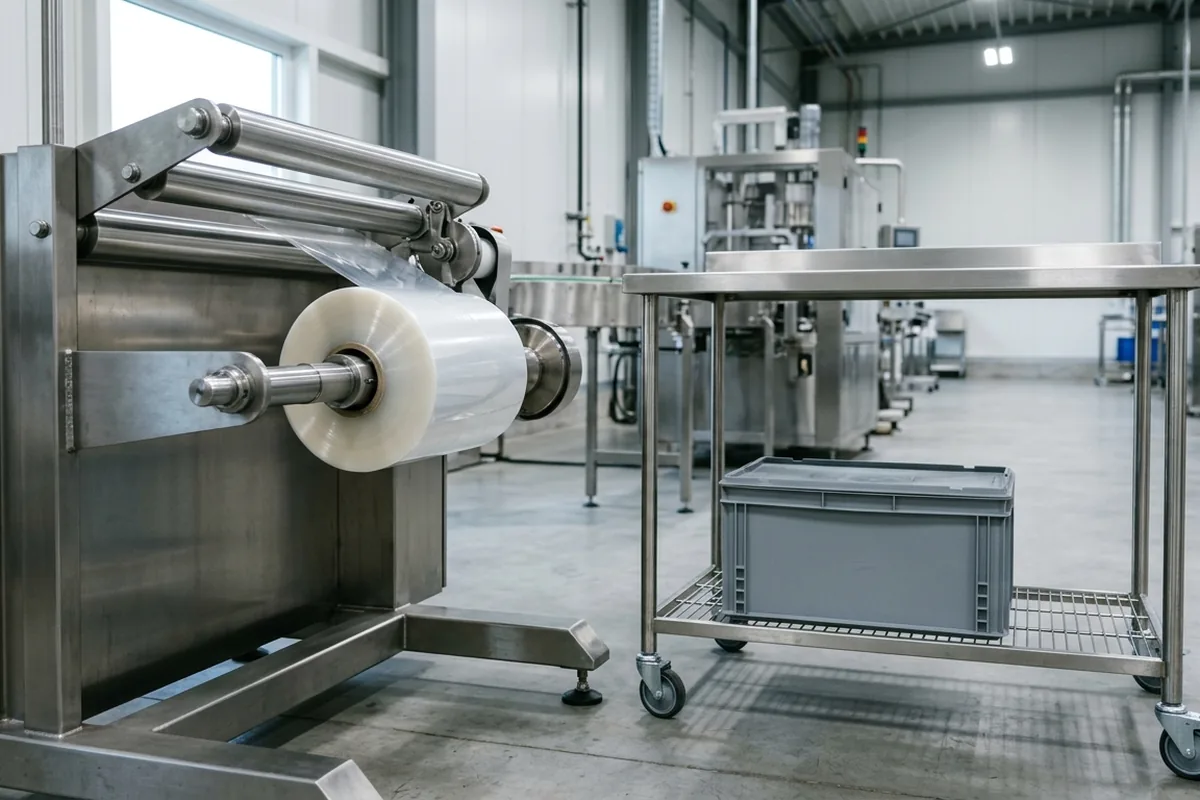
At the post-production stage, label management procedures should address removing unused packaging and labels from the packaging line and storing them after a production run is complete, including ensuring product labels/packages are switched appropriately at product changeover. When confirming that the correct label is applied to the correct product during production, FDA Chapter 11 recommends checking at the beginning of production and each time new labels/packages are brought to the line for manual inspection, continuously for continuous barcode scanners, or at regular intervals (e.g., 1-, 2-, or 4-hour intervals) for manual barcode scanning or manual confirmation. Under 21 CFR 117.150(c)(2), if an incorrect label/package is observed in the staging area and returned to storage before production begins so that it is not used to label/package food, it can be treated as a minor problem via correction unless the problem is recurring.
Cross-border and retail supplier audits also check physical breaks and container identification across the packaging hall:
- CFIA packaging and labelling controls include a break in production when changing food types, using marked containers prior to labelling, verifying labels prior to application, verifying that inner and outer packaging labels are for the same food, reviewing labels upon ingredient substitution or formulation change, and disposing of incorrect or outdated labels.
- To prevent allergen cross-contact from rework, FDA Chapter 11 Appendix 11-1 recommends implementing a rework policy where rework is added back to the same finished product (“exact into exact”) whenever practical, or to another product with the same food allergen profile.
| Changeover Phase | Line-Clearance Activity | Audit Evidence Reviewed | Responsible Role |
|---|---|---|---|
| Pre-run staging | Rollstock and carton sample check before staging | Signed staging log with label specimen | Packaging lead |
| Active run | Single-product label alignment at the line | Barcode scanner log or interval check sheet | Line operator |
| Run completion | Removal and storage of unused film and labels | Post-run clearance sign-off and return count | Packaging supervisor |
| Rework handling | Segregation of rework into marked containers | Rework container tag and batch routing log | Quality verifier |
Wet and Dry Allergen Cleaning Mechanics and Disassembly Blind Spots
Routine sanitation and allergen cleaning address different physical hazards on shared processing and packaging lines. Cleaning procedures targeting microbial hazards may not be adequate for allergen removal, so a processor must assess its cleaning and sanitation program to ensure it removes allergens and prevents cross-contact. The presence of allergens, gluten, and added sulphites cannot be eliminated by a thermal treatment or post-processing step, making preventive control measures necessary throughout preparation.
Wet Wash Sequences and Detergent Chemistry
Written allergen SSOPs should provide detailed instructions on equipment breakdown for cleaning and define specific protocols, chemicals, concentrations, temperature set-points, and solution flow rates. Written allergen SSOPs should require freshly prepared cleaning solutions rather than reused cleaning solutions whenever possible, because reused solutions may recontaminate surfaces with allergenic food residues. In wet cleaning operations, a common sequence of operations is Pre-clean (scraping to remove foods), Pre-rinse, Apply detergent and Scour, Post-Rinse, Prepare for Inspection, Pre-op Inspection, Sanitize, and Assemble. Wet cleaning is recommended to eliminate doughy or sticky residues containing allergens, gluten, or sulphites; rinsing with water alone is insufficient, and chlorinated alkaline detergents are the most effective for removing proteins (with alkaline/caustics with hydrogen peroxide and enzymes also effective).
When evaluating automated wash cycles on fillers and transfer piping, compare the documented parameters against our clean-in-place validation guide for packaging lines.
Dry Particle Removal, Purging, and Harborage Points
To remove loose, dry particles from surfaces, FDA Appendix 10 recommends using vacuums equipped with filters designed to capture allergenic particles. For “push-through” cleaning methods (pushing finished product, salt, flour, or other material through the line), validation studies should determine the time or volume needed to purge all allergenic food. Processors should avoid the use of compressed air and grit blasting for removing food residue from difficult-to-clean areas because compressed air and grit blasting can disperse allergens from one area to another. FDA Appendix 10 recommends avoiding high-pressure water hoses that could spread and aerosolize allergenic materials during cleaning, or ensuring affected nearby food-contact surfaces are adequately cleaned.
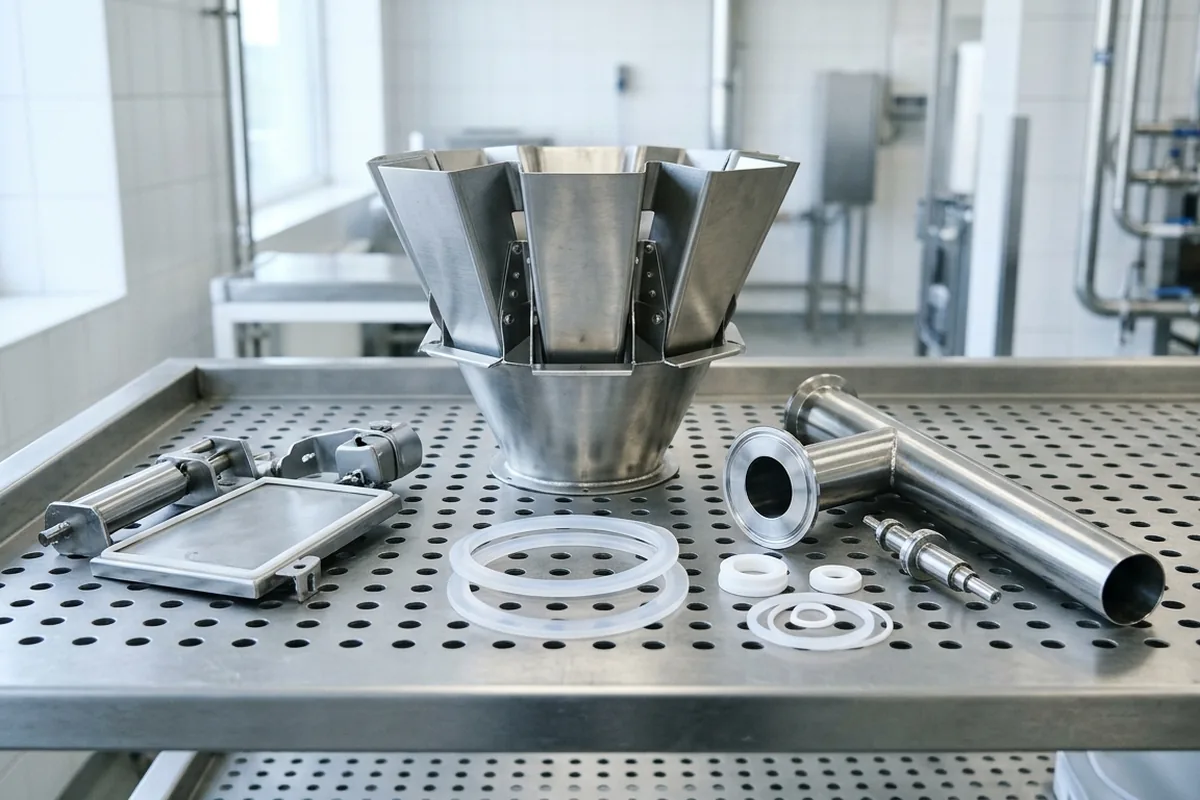
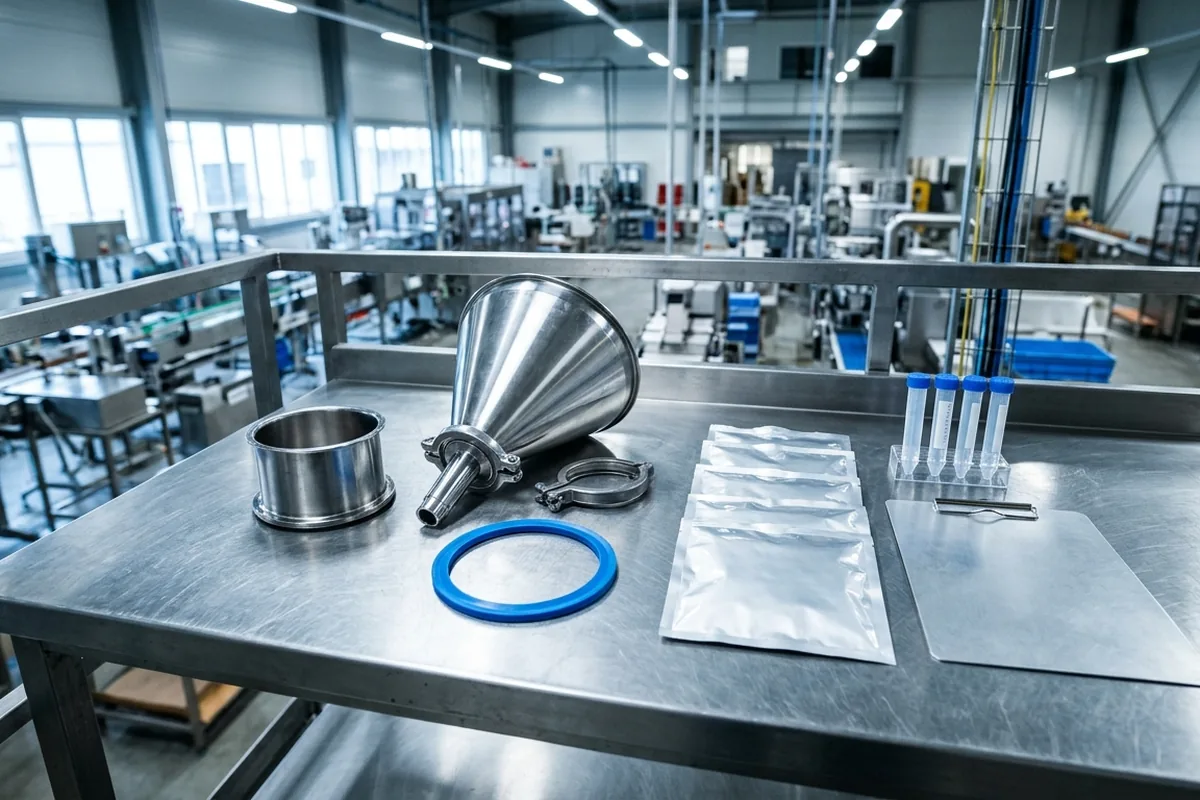
Visual monitoring of cleaned equipment should be conducted when equipment is still disassembled after cleaning. A hotspot or harborage point is a location where allergen residues can persist due to design, wear, or cleaning limitations (such as seals, gaskets, dead legs/low-flow zones, worn belts, cracked plastics, rough welds, and valves/nozzles), while a unique test site is defined by surface material, geometry/complexity, cleaning method, product/allergen exposure, and transfer risk. Pair disassembly checks with the equipment cleanability inspection questions so dead legs and seal grooves are inspected before reassembly.
Mapping Swab Locations and Selecting Analytical Methods
Auditor review of allergen swab test records starts with how sampling points are distributed across product-contact and adjacent surfaces. Allergen environmental zoning classifies surfaces into Zone 1 (direct food-contact surfaces), Zone 2 (adjacent surfaces with plausible transfer to Zone 1, such as frameworks, guards, exterior of hoppers, and equipment legs), Zone 3 (within-room non-contact surfaces such as floors, drains, carts, forklifts, and door handles), and Zone 4 (remote/non-production areas such as hallways and offices). Equipment swabs should be obtained both pre- and post-cleaning at multiple locations on each processing line, where swabs obtained pre-cleaning serve as positive control samples.
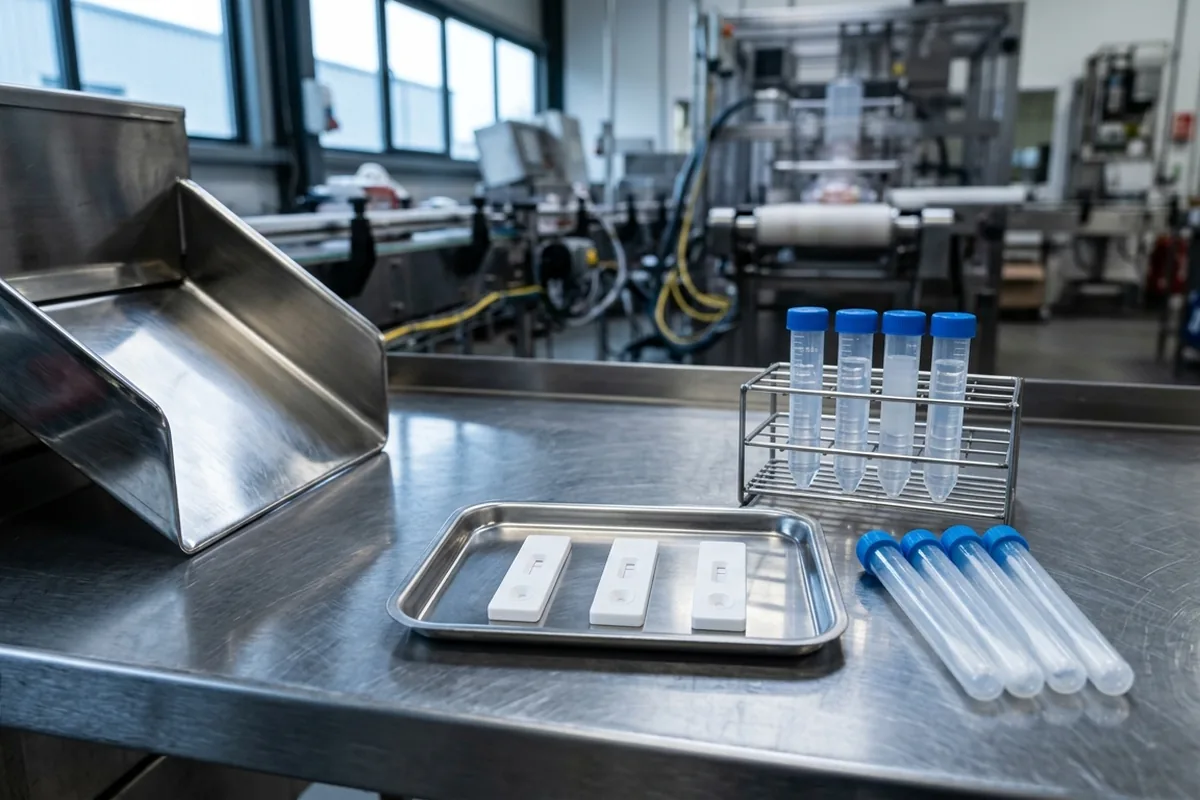
When a product contains two or more allergens, validation procedures using analytical techniques should focus on the highest percent allergen within the formula or allergens that are the most difficult to remove. Swab recovery varies by surface—stainless steel is generally cooperative, whereas scratched plastics, porous materials, worn seals, and rough welds can lodge proteins in micro-scratches or pores where swab recovery is reduced—and residual sanitizers (such as quats or peracetic acid) on surfaces may affect extraction and test performance.
Analytical method selection and corrective-action scope depend on protein specificity and processing history:
- It is not recommended to use ATP swabs alone for allergen cleaning verification since ATP is present in most foods and is not a specific indicator for allergens.
- ATP tests are considered non-specific tests for cleanliness because ATP is found in all living cells (food, microorganisms, or human skin), and ATP or general protein tests may not be sensitive enough to detect a particular allergenic protein.
- Analytical methods used to verify the effectiveness of allergen and gluten control measures should be capable of detecting the ingredient under consideration in the low mg/kg range.
- Polymerase chain reaction (PCR) DNA-based methods target specific DNA sequences for sensitive detection of food allergens, but are negatively affected by thermal treatments, with the effect being most pronounced under acidic conditions.
- In highly processed foods (roasted, baked, extruded, or fermented), proteins may be denatured, become insoluble, or have altered epitopes so that a finished product can test negative even when allergen material is present; therefore, finished-product testing should not be used as the primary evidence for cleaning effectiveness.
- When a food allergen is detected on cleaned food-contact surfaces and corrective action is required, FDA Chapter 11 recommends considering all food lots produced from cleanup to cleanup when determining which food is affected.
Rapid Surface Swab and Lateral Flow Kit Specifications
When reviewing laboratory or line-side allergen swab test records, check the kit identifier, extraction buffer, detection limit, and incubation or read time recorded by the operator:
- Hygiena AllerFlow Gluten (Product Number ALF-GL, 25 items per kit) is a rapid lateral flow gluten swab test device for environmental surfaces that delivers visual results in 10 minutes with 5 ug per swab sensitivity, detecting toxic fractions from wheat, barley, rye, and oats with no cross-reactivity with soy, rice, corn, or nuts.
- Hygiena AllerSnap (Item No. ASY0292, Reference No. ALS-100, 100 tests per box, $294.61 per box excl. tax) is a broad-range protein residue swab test that requires an incubator and validates surface hygiene in 15-30 minutes via a reagent color change from green (clean) to purple (re-clean).
- Hygiena AlerTox Sticks Peanut (Item No. KIT3094, 10 tests per kit, $199.61 excl. tax) is a qualitative immunochromatographic lateral flow test validated for food, surfaces, and rinse water with a Limit of Detection of 1 ppm in raw and roasted peanuts, a Range of Detection of 1 ppm - 10,000 ppm, and qualitative results in 10 minutes.
- Neogen Reveal® 3-D for Egg (Product Number 902082Q, 10 purple test devices with Type 8 extraction buffer) has a rinse/food limit of 2.5 ppm egg protein (5 ppm egg), a swab limit of 5 µg/100 cm2 egg protein (10 µg/100 cm2 egg), and a 5-minute testing time.
- Neogen Reveal® 3-D for Soy Allergen (Product Number 902093K, 10 beige test devices with Type 8 extraction buffer) has a rinse/food limit of 5 ppm soy, a swab limit of 2 µg/100 cm2 soy, and a 5-minute testing time.
- Neogen Reveal® 3-D for Sesame (Product Number 8535, 10 test devices with Type 10 extraction buffer) has a rinse limit of 5–10 ppm, a swab limit of 5 µg/100 cm2, and a 5-minute testing time.
- Neogen Reveal® 3-D for Almond (Product Number 902086G, 10 yellow test devices with Type 12 extraction buffer) has a rinse/food limit of 5 ppm almond, a swab limit of 3–4 µg/100 cm2 almond, and a 5-minute testing time.
Changeover Documentation and Line-Release Verification Checklist
Before signing off a shared processing or packaging line after an allergen changeover, auditors cross-check the sanitation log, packaging clearance sheet, and swab record against the fields below.
| Audit Record Document | Verification Field | Evidence Checked During Line Release | Sign-off Authority |
|---|---|---|---|
| Equipment breakdown sheet | Disassembled parts and seal list | Visual check while parts remain off the line | Sanitation lead |
| Wash parameter log | Detergent make-up, temperature, and flow | Fresh solution batch and wash cycle chart | Sanitation operator |
| Packaging clearance log | Previous film, cartons, and labels removed | Staging rack inspection and label specimen | Packaging supervisor |
| Swab verification log | Pre-clean and post-clean swab results | Kit lot, buffer type, swab site, and read time | Quality release verifier |
Include these line-release entries in the changeover packet for each shared packaging line:
- Prior run product identity and outgoing allergen profile
- Next run product identity and incoming label specimen
- Disassembly checklist covering hoppers, nozzles, gaskets, and belts
- Fresh detergent batch record and rinse verification
- Pre-cleaning positive control and post-cleaning swab results by zone
- Visual inspection sign-off before equipment reassembly
- Cleanup-to-cleanup lot bracket hold instructions if a post-clean swab fails
Integrate this changeover packet with the packaging line supplier audit checklist and the food equipment evidence checklist when preparing for an onsite customer or third-party audit.
Sources
- U.S. Food and Drug Administration — Draft Policy Guide on Major Food Allergen Labeling and Cross-Contact
- U.S. Food and Drug Administration — Guidance on Cleaning and Sanitation for the Control of Allergens
- U.S. Food and Drug Administration — Draft Guidance for Industry: Hazard Analysis and Risk-Based Preventive Controls for Human Food, Food Allergen Program
- Canadian Food Inspection Agency — Preventive Controls for Food Allergens, Gluten and Added Sulphites
- Hygiena — Allergen Cleaning Validation and Verification Technical Guide
- Hygiena — AllerFlow Gluten Rapid Surface Swab Instructions
- Hygiena — AllerSnap High-Sensitivity Allergen Prevention Swab Instructions
- Hygiena — AlerTox Sticks Peanut Lateral Flow Rapid Kit Instructions
- Romer Labs — Environmental Swabbing and Allergen Cleaning Validation Guide
- Neogen — Reveal Rapid Lateral Flow Procedure Guides for Egg, Soy, Sesame, and Almond